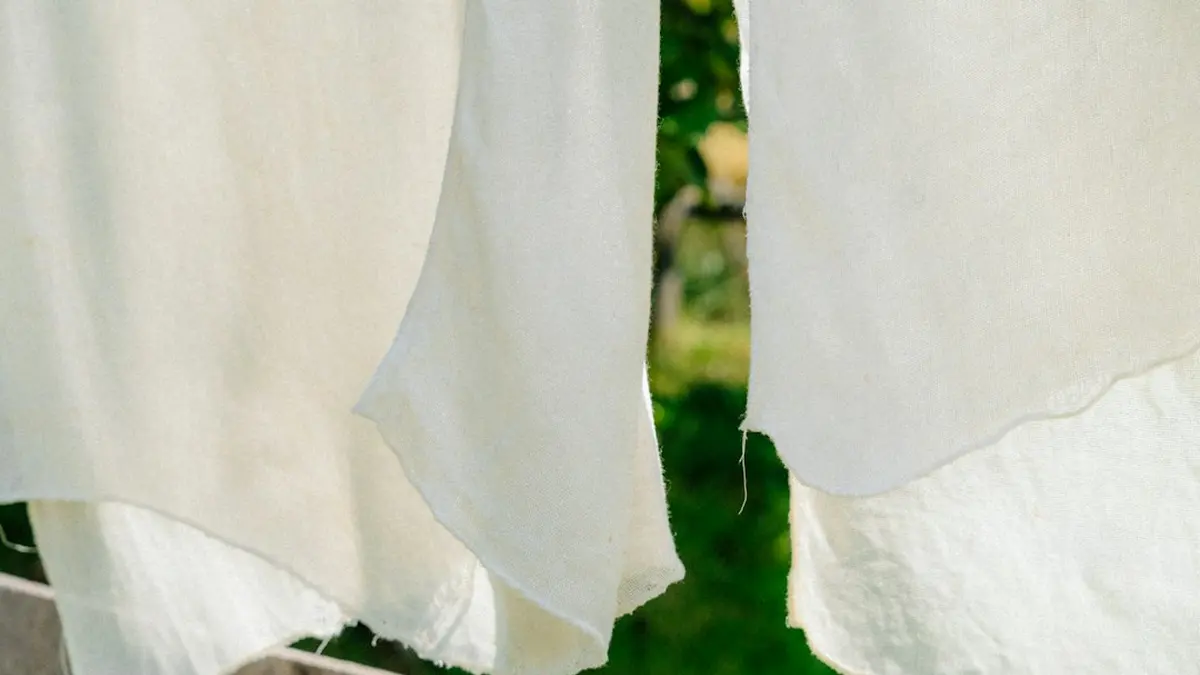
Follow these steps to clean a cushion, umbrella canopy, awning or cover and dry it fully before it goes back out or into storage. Each wash needs about 15 minutes of soak time. Complete drying can take several days. Before you start, read the care tag, because the method depends on the fiber and bleach is safe only on fabric rated for it.
What you need
-
Soft bristle brush
For cushions, also use a vacuum with an upholstery attachment.
-
Mild dishwashing liquid
For general cleaning, mix 1/4 cup per 1 gallon of water. For upholstery spot cleaning, mix 1 teaspoon per 1 cup of lukewarm water.
-
Spray bottle or bucket
-
Garden hose
For rinsing.
-
Clean, dry cloths or towels
For blotting spills and removing excess water.
-
Chlorine bleach
Use only for mildew, and only on fabric rated for bleach.
Match the method to the fiber
The method changes with the fiber. To see how the fibers differ in care and lifespan, use the outdoor shade fabric comparer.
| Fiber | What the sources say |
|---|---|
| Solution-dyed acrylic | Tolerates stronger cleaners, including diluted bleach, better than cotton/polyester blends. Acrylic awnings need a longer soak to lift mold. |
| Polyester | More mold-resistant overall. It still needs complete drying to stop mold coming back. |
| Canvas | Use cold water and mild laundry soap only. |
| Vinyl | Do not use harsh chemicals. |
| Olefin, HDPE shade cloth | None of the sources used here give instructions for these fibers. Follow the maker's label. |
Sources: Marygrove Awnings and AZ Garden Furniture HQ.
The steps
-
Remove loose dirt
Do this outdoors. Shake the cushion, or brush the panel with a dry brush. Vacuum the seams and piping. When it has worked, no crumbs, hair or pollen remain in the seams.
-
Spot-test the solution
Apply the solution to a hidden area first. When it has worked, the color and texture are unchanged after drying.
-
Spray the whole panel
Spray from seam to seam, not just the stain. Cleaning the full panel avoids water rings (Sunbrella). When it has worked, the whole panel is evenly damp.
-
Work in the solution
Use the soft bristle brush.
-
Let it soak
Leave the solution on for 10 to 15 minutes.
-
Rinse
Rinse with the hose, paying attention to seams and folds. When it has worked, the rinse water runs clear with no suds.
-
Air-dry
Never use a dryer. Stand cushions on their edges. Leave an awning extended until it is fully dry. When it has worked, the fabric and any foam inside are dry to the touch throughout.
Most Sunbrella upholstery covers are machine washable. To wash one, close the zippers and use cold water, the delicate cycle and a mild laundry detergent. Air-dry the cover afterward.
Mildew and set stains
Mildew. On fabric rated for bleach, Sunbrella gives this mix: 1/4 cup dishwashing liquid and 1 cup bleach per 1 gallon of water. In the washing machine, add 1 cup of bleach to the wash. For light mold, Marygrove uses equal parts white vinegar and water.
After treatment, scrub the dead mold off the fabric. The EPA states that dead mold can still cause allergic reactions. Use bleach only where there is good ventilation. Never mix bleach with a cleaner that contains ammonia.
Sunbrella's warranty does not cover mildew. The maker treats mildew as a cleaning issue because it grows on dirt and pollen, not on the fabric itself.
Other stains. These treatments come from Sunbrella's cleaning guide:
- Grease and oil: apply cornstarch, remove the excess, then wash with soap solution.
- Gum, crayon and wax: treat with isopropyl alcohol.
- Ink and nail polish: use 100% acetone.
- Iron rust: apply CLR, then rinse thoroughly.
- Tree sap: use a solvent, Murphy Oil Soap, turpentine or acetone.
Set-in residue may need professional cleaning.
Storing it for winter
Store fabric only when it is completely dry. Use breathable covers or bags with mesh vents. The EPA advises keeping humidity below 60%, ideally between 30% and 50%. Keeping storage in that range inhibits mold.
None of the sources here give a method for re-proofing. One recommends a water-repellent fabric protector as a preventive step. If you use one, follow its label.
If it did not work
The fabric is now clean, dry and ready to use or store. Before you buy replacement fabric, compare UV block, care and lifespan by fiber in the fabric comparer.
Comments
No comments yet. Be the first to comment!
Leave a Comment